Crimes Against Humanity and War Crimes Act (S.C. 2000, c. 24) [Link]
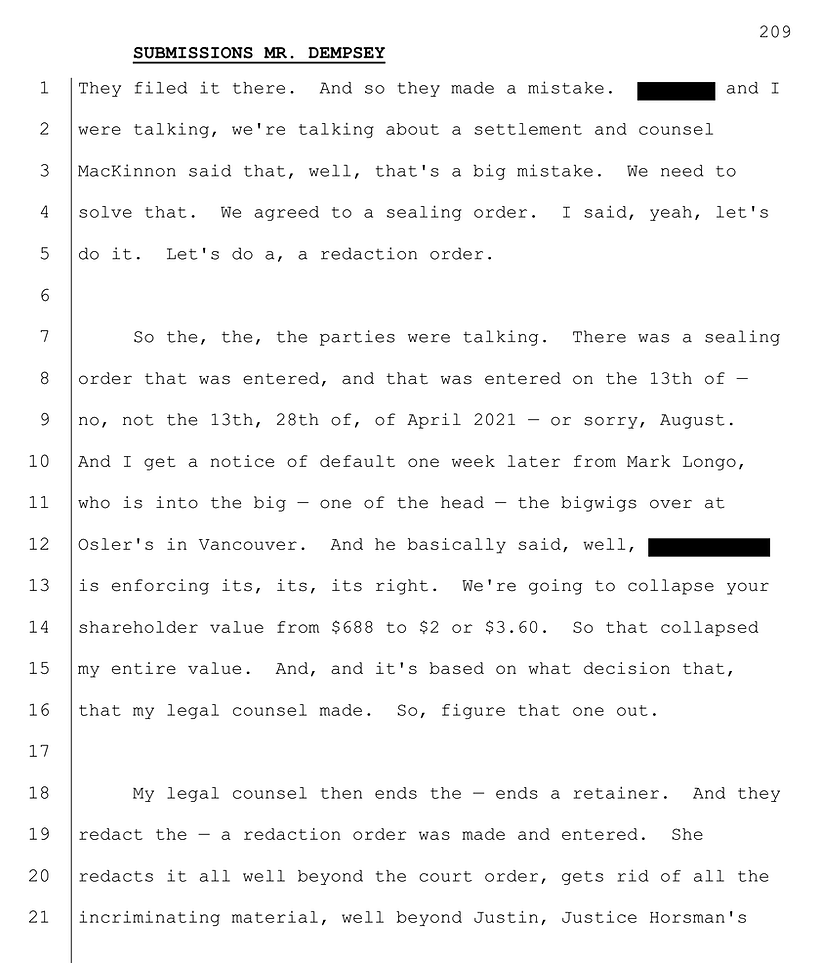
July 23, 2026 Transcript [Court Access]
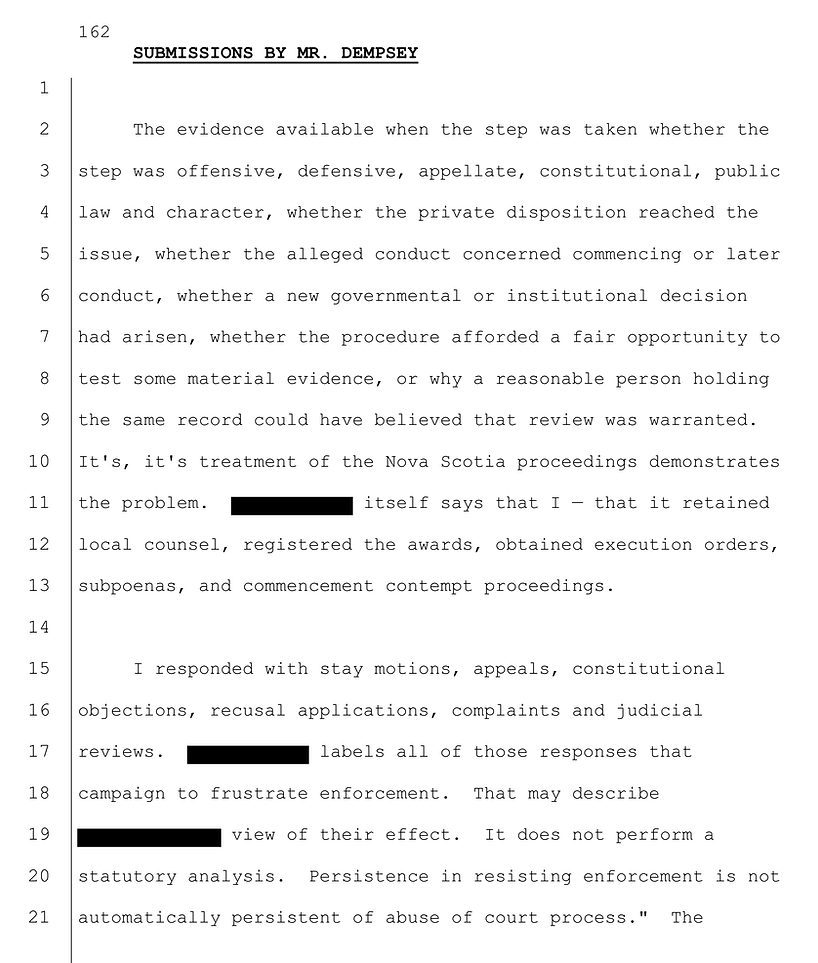
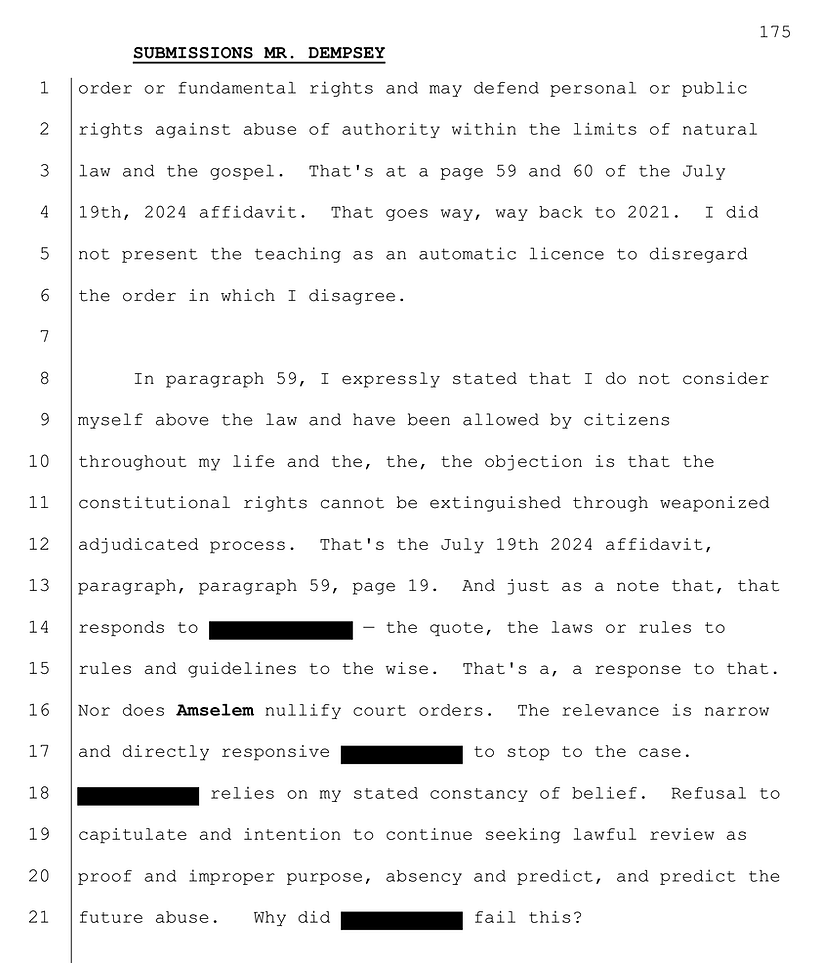
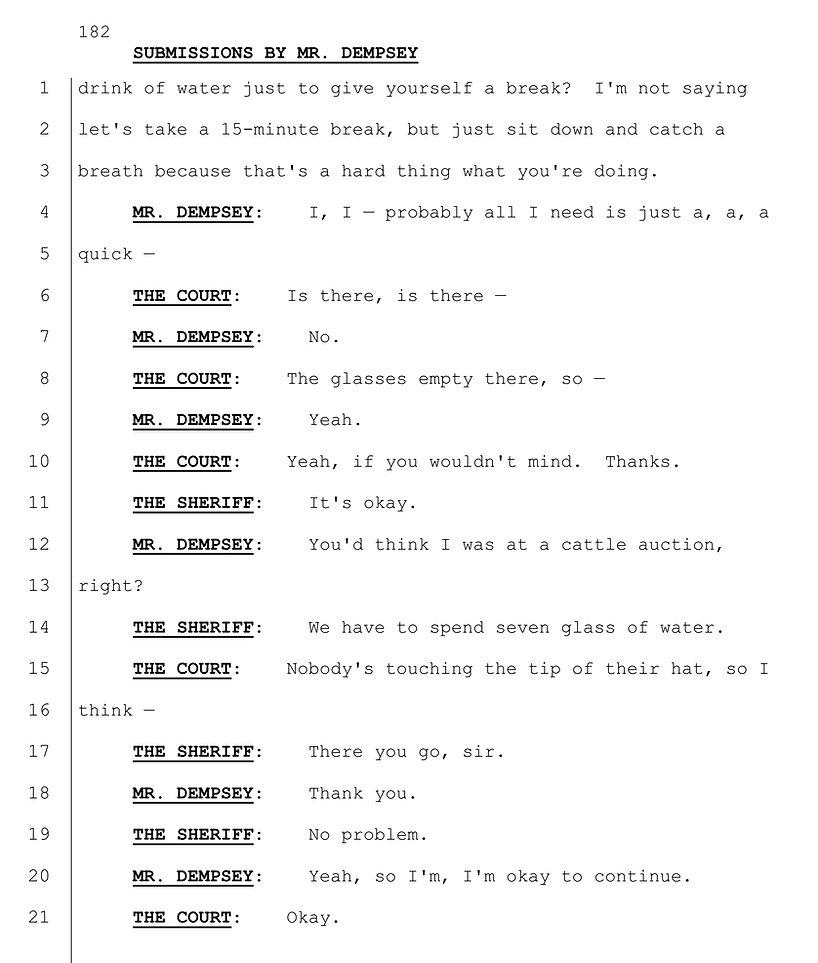
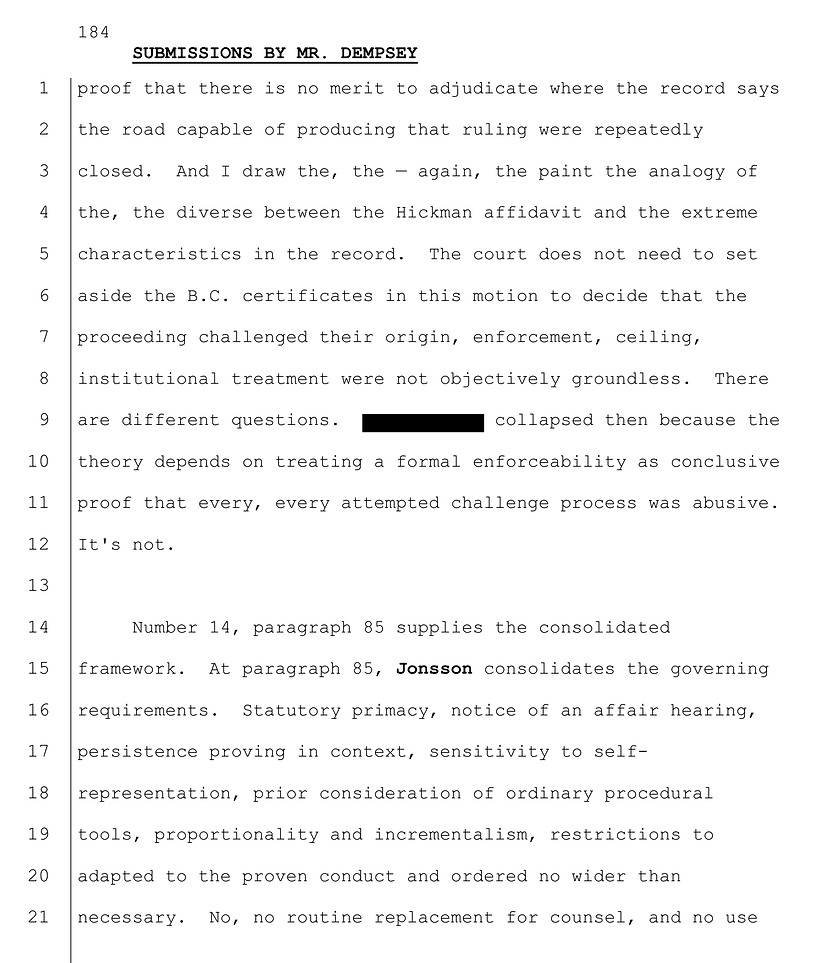
Transcript, Cont'd.


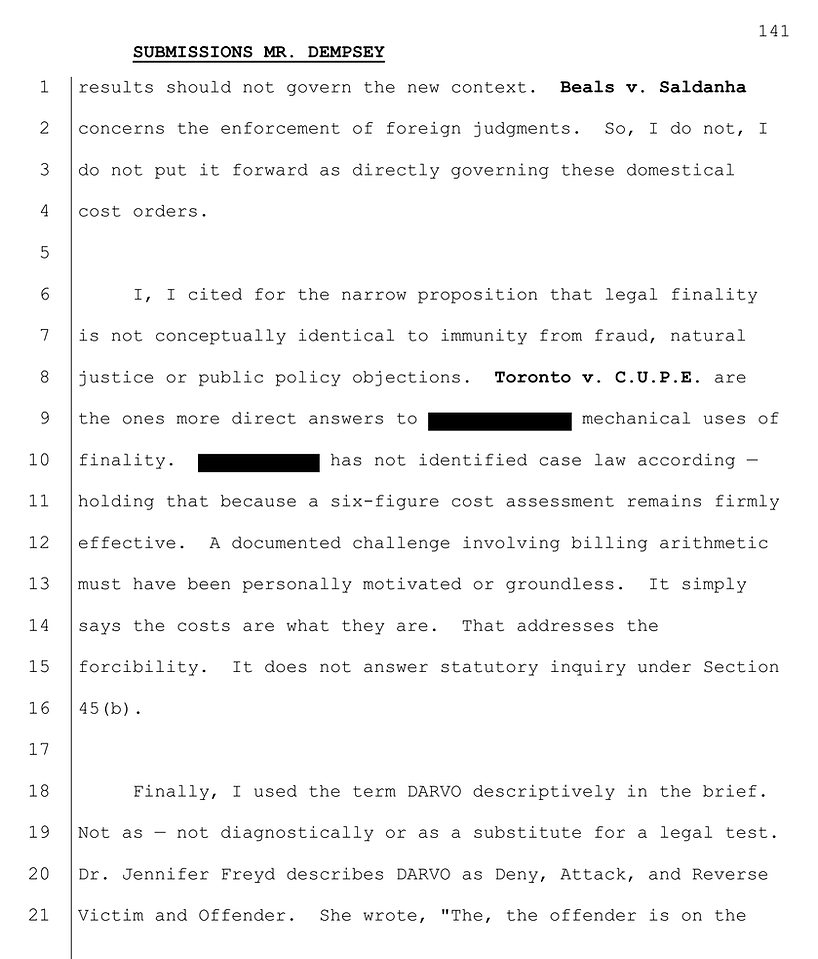


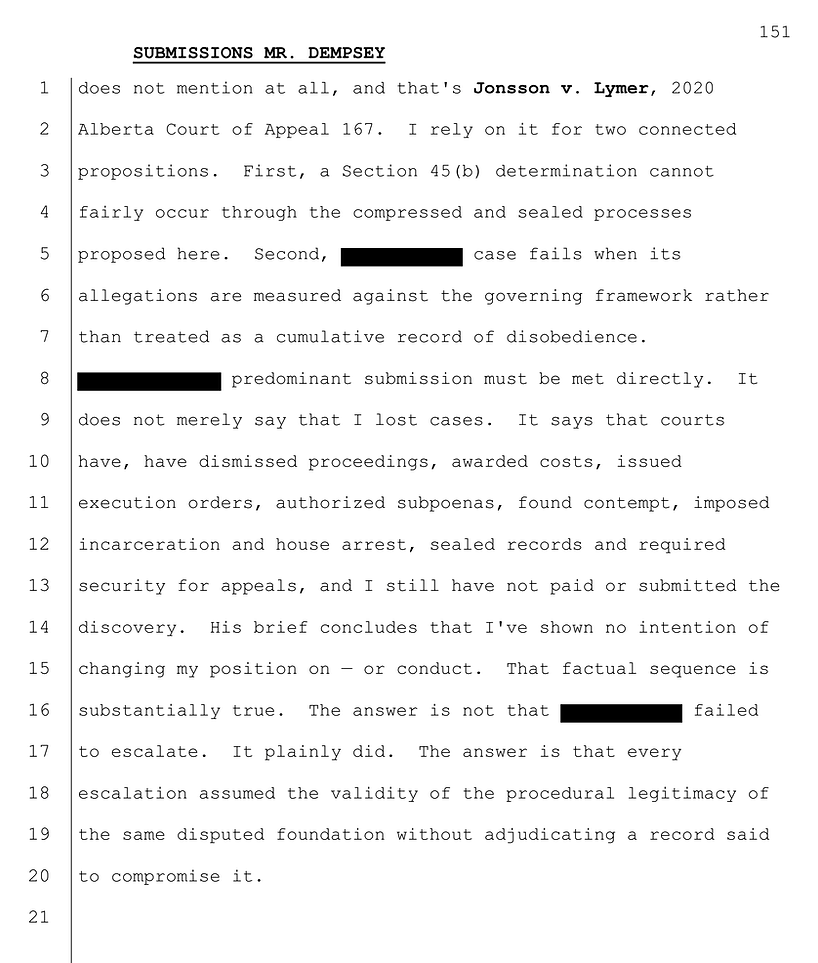


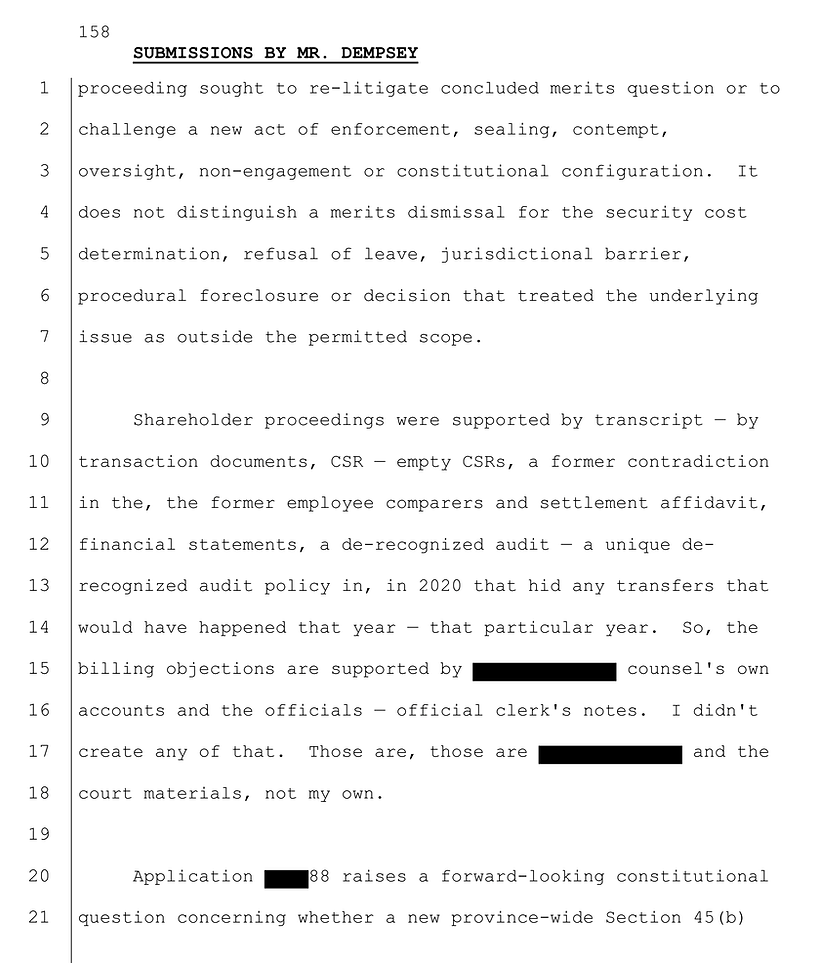


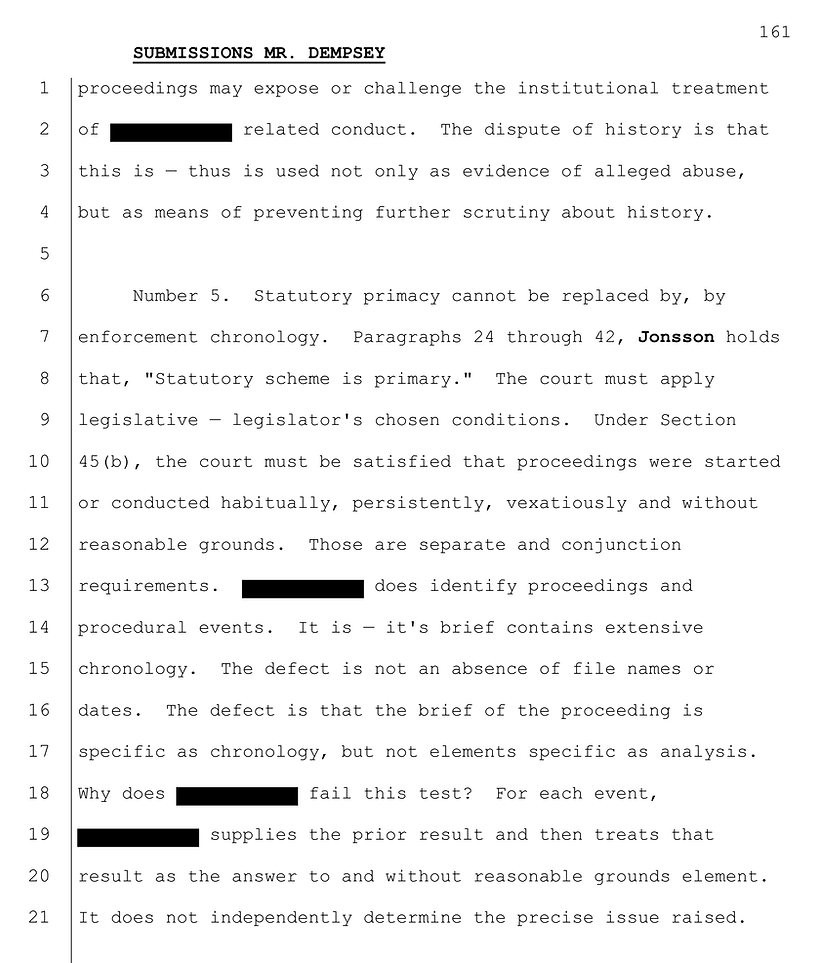







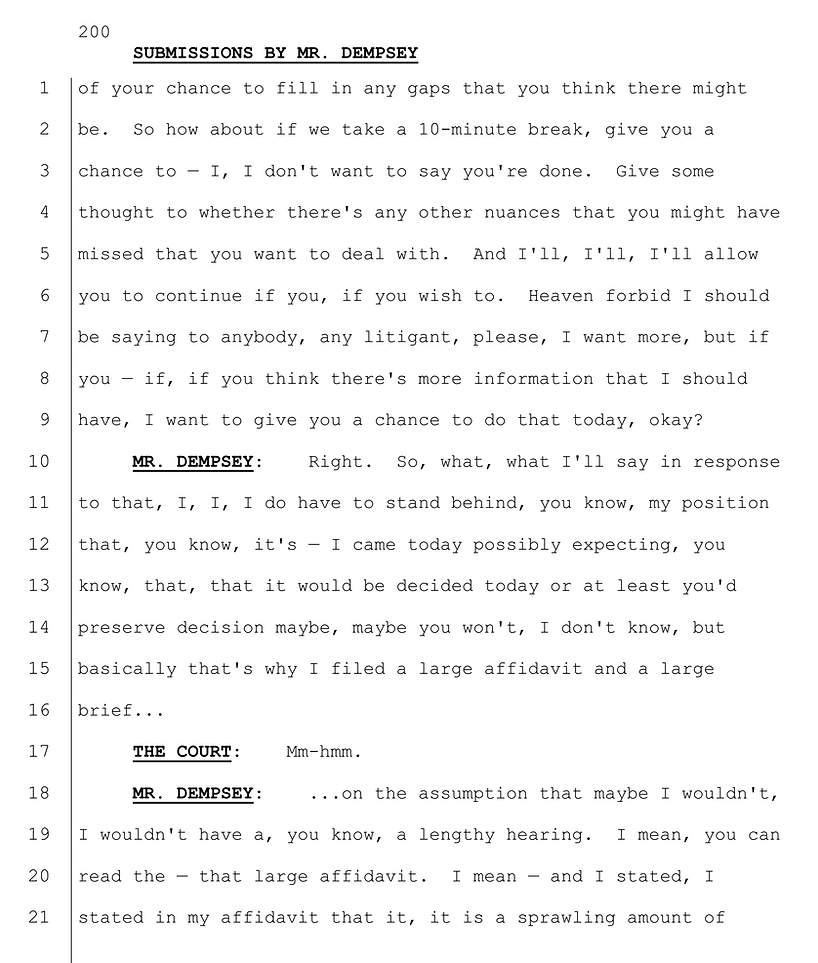

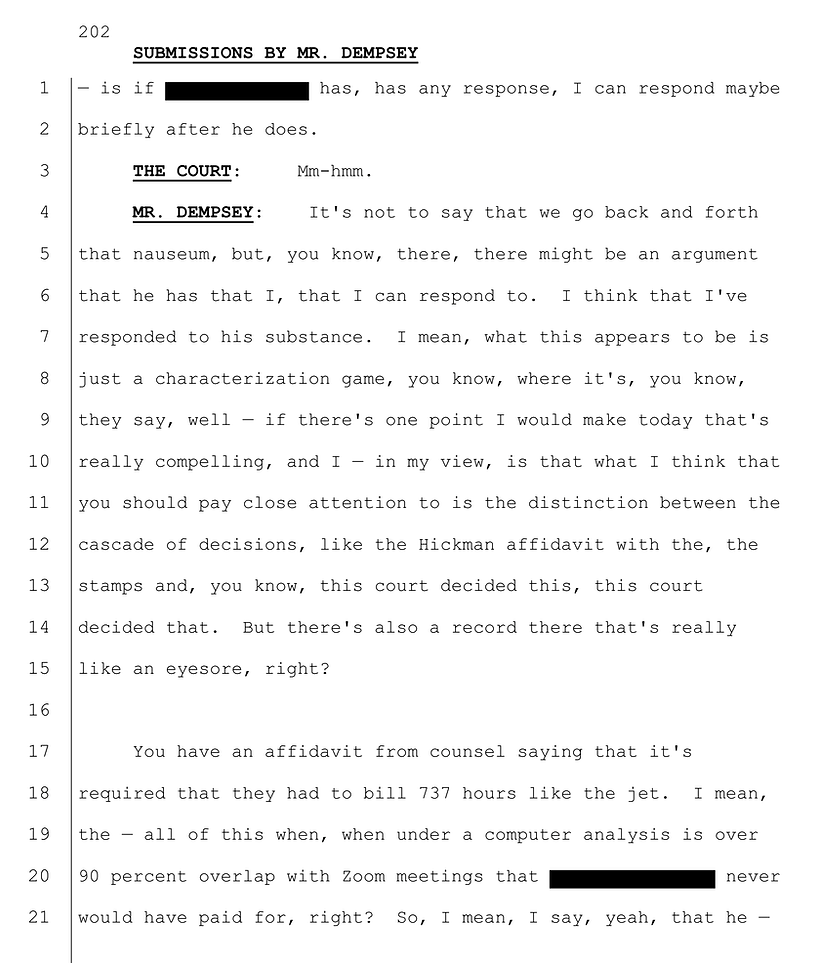
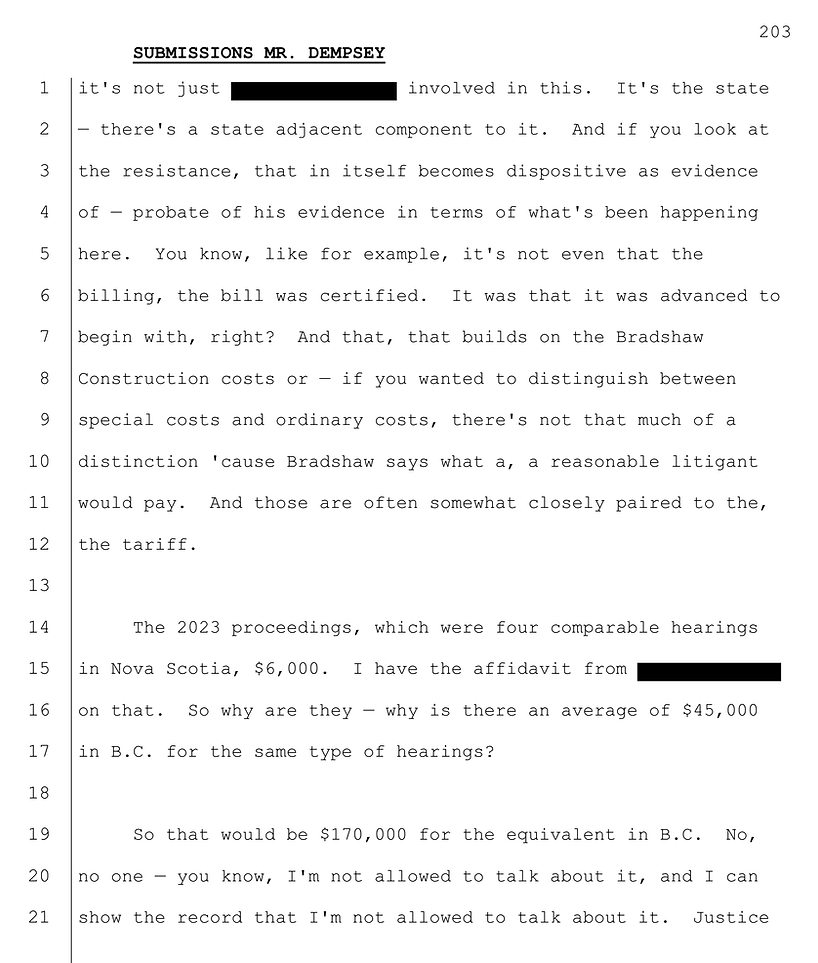


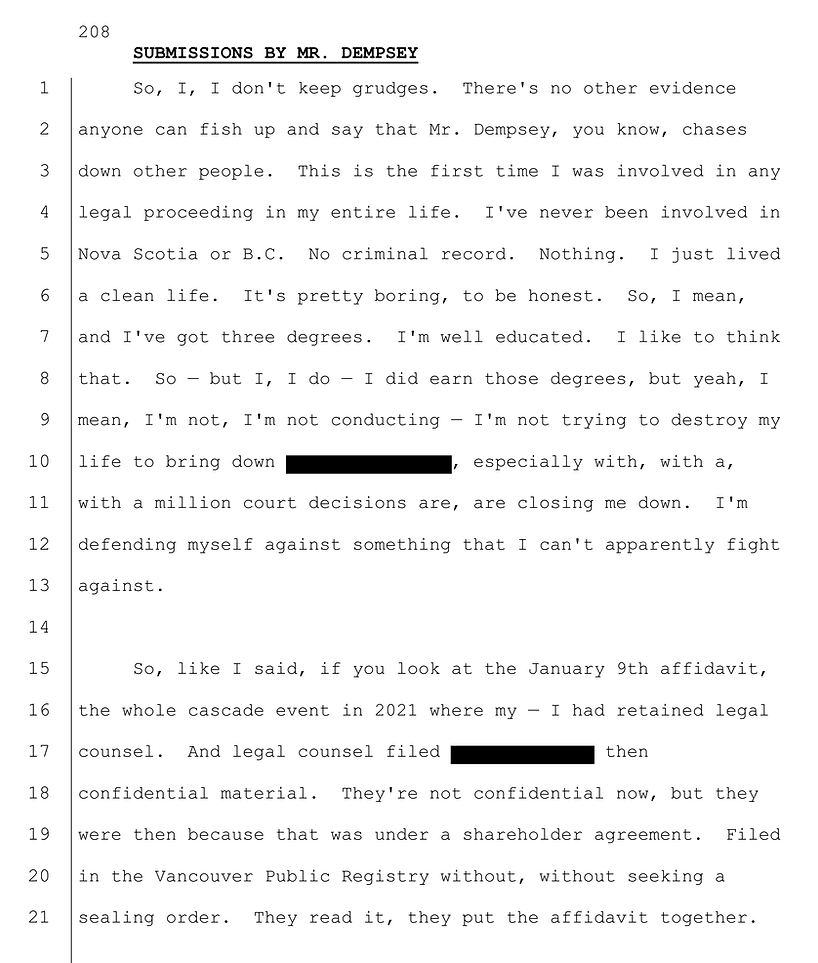


Appeal Process Predetermined
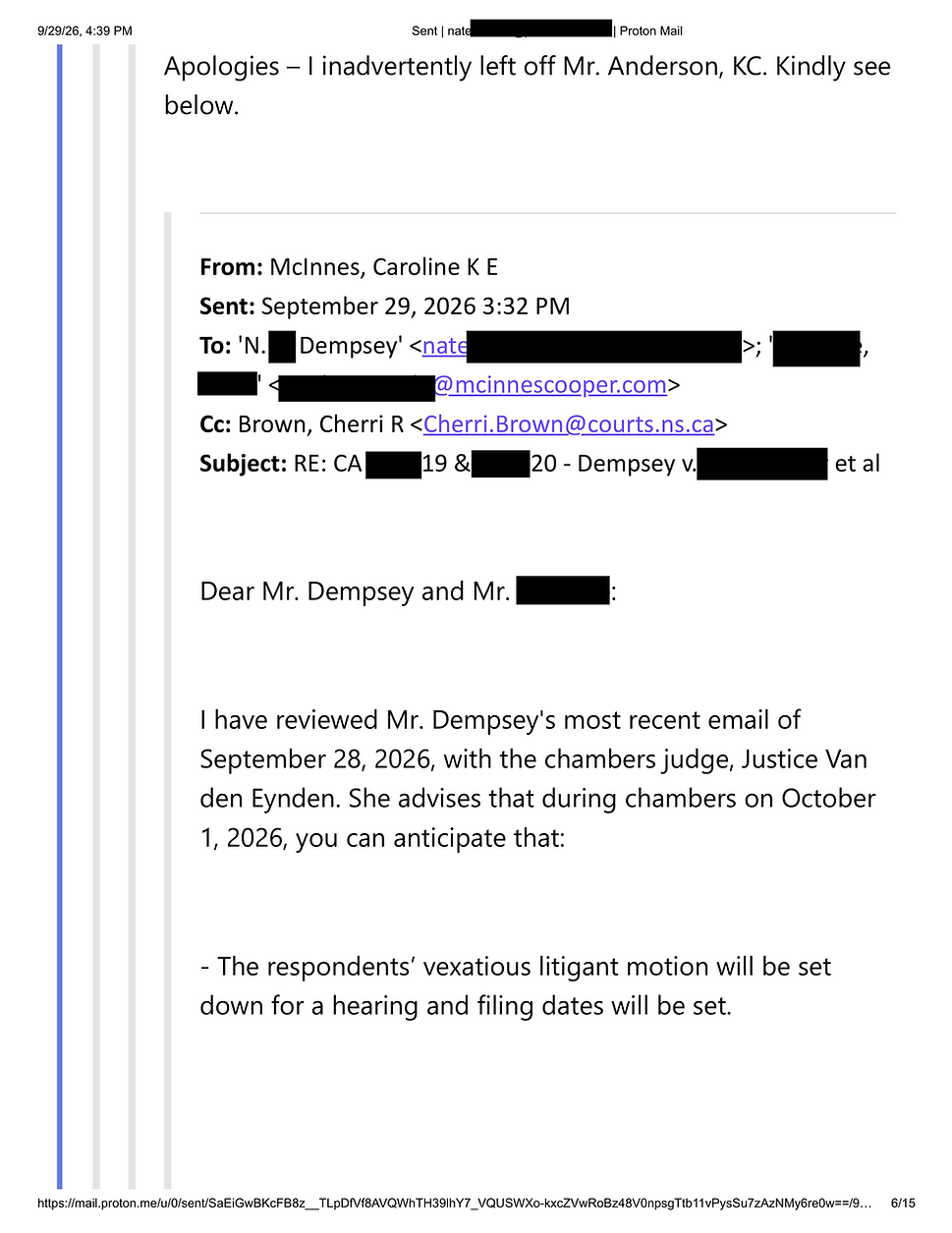
A CAGE vexatious-litigant motion for the Nova Scotia Court of Appeal, filed two days before the Date and Directions hearing for the Appeal of the Campbell order, was automatically placed ahead of the existing appeal-perfection process, before the Court heard any written or oral submissions on sequencing.
Access to Justice Treated with Utter Disregard
The CAGE filed a new vexatious-litigant motion only two days before the October 1, 2026 Date and Directions hearing. Dempsey had already filed motions on September 8, 2026 seeking the directions required to advance NSCA ****19 and NSCA ****20; the appeals arising from the Campbell order.
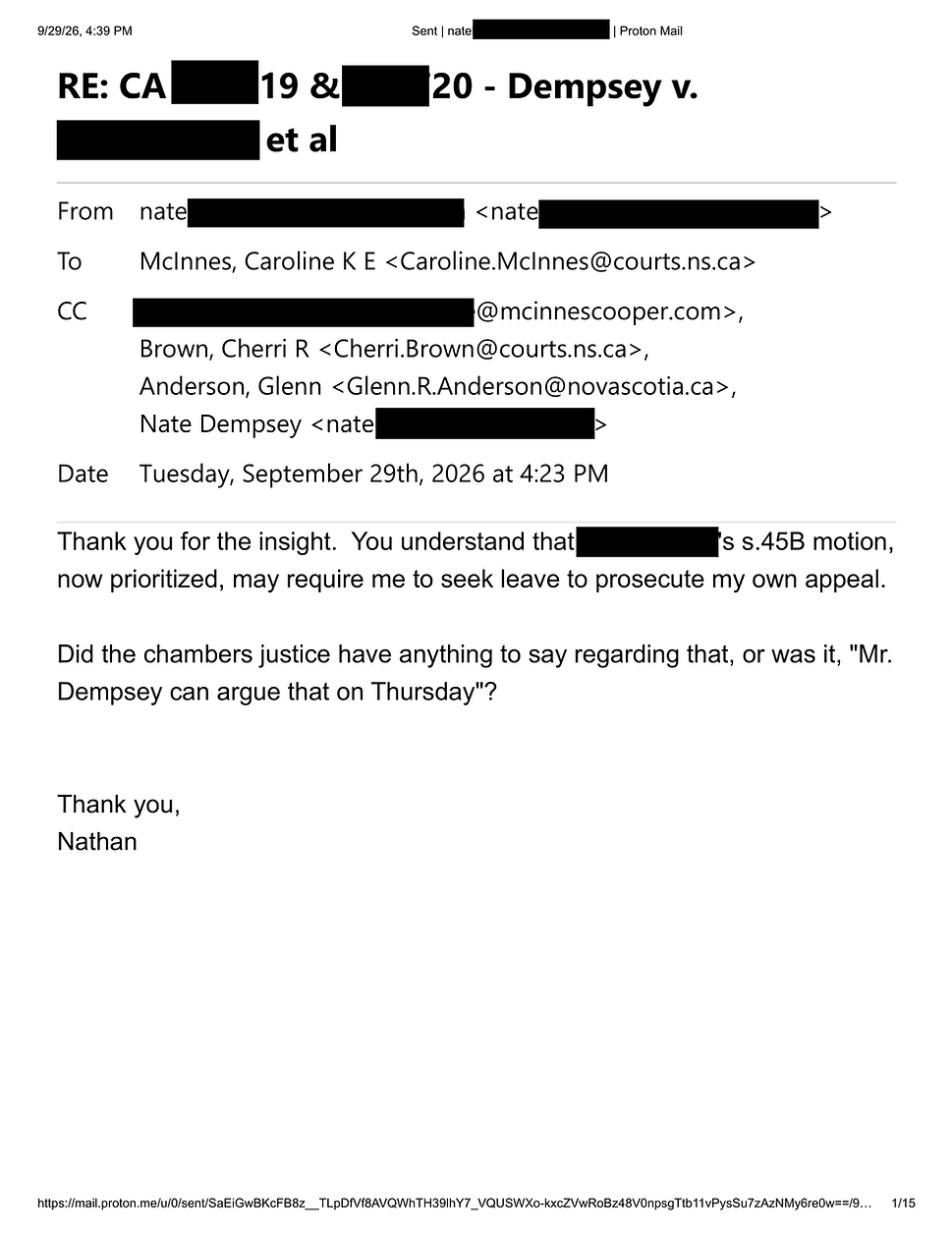
Before any formal written or oral submissions on sequencing were filed and heard, however, the NSCA Registrar advised that the Court had decided in advance that the CAGE motion would proceed first, and that Dempsey’s existing motions would be “adjourned without date pending a decision on the vexatious litigant motion.”
That, very plainly, is predetermination.
When Dempsey asked whether that meant the new motion would actually be heard and determined before anything occurred on his appeals, the Registrar confirmed: “Yes, your interpretation is correct. That is what parties may expect.
The October 1, 2026 orders then formalized what had already been decided: nothing would move on Dempsey’s appeals until the CAGE’s new gatekeeping motion was dealt with.
That sequence strikes directly at the most elementary requirements of a fair adjudicative process. In Kane v. Board of Governors of U.B.C., [1980] 1 S.C.R. 1105 at p. 1113, the Supreme Court held that a tribunal must “listen fairly to both sides” and give the affected party a fair opportunity to correct or contradict prejudicial material.
Supreme Court of Canada Decisions In Cardinal v. Director of Kent Institution, [1985] 2 S.C.R. 643 at para. 23, the Court was categorical: “the denial of a right to a fair hearing must always render a decision invalid,” and the hearing right is an “independent, unqualified right.” A court cannot excuse the missing process by speculating that the same outcome would have followed anyway.
In R. v. S. (R.D.), [1997] 3 S.C.R. 484 at paras. 104–105, impartiality is defined by an adjudicator remaining “open to persuasion by the evidence and submissions.”
The Nova Scotia Court of Appeal applied that same principle in R. v. Nevin, 2024 NSCA 64 at para. 77, criticizing preliminary remarks that revealed a conclusion had already been reached before submissions because they signalled that the judge was no longer open to persuasion.
And Charkaoui v. Canada, 2007 SCC 9 at paras. 29 and 48 identifies the constitutional architecture plainly: a fair process requires a hearing, an independent and impartial decision-maker, and a decision grounded in the facts and the law—“Both facts and law must be considered for a true adjudication.”
The Kafkaesque feature is therefore not rhetorical. The appeals existed to challenge an existing court-access restriction and the process by which it had been imposed. Before those appeals could even be perfected, the CAGE filed another court-access restriction and the Court immediately allowed that new restriction to halt the machinery required to bring the appeals forward. The review mechanism was thus subordinated to the very form of gatekeeping it was supposed to review. That is precisely the kind of self-reinforcing institutional trajectory identified throughout the dossier as a whole: adverse institutional outputs travel forward, while the underlying source question remains unadjudicated; closure becomes the premise for more closure instead of producing what the document calls “corrective friction”—fact, governing rule, independent application, bounded conclusion.
Canada v. Tobiass, [1997] 3 S.C.R. 391 makes the recursive problem legally recognizable: at para. 94 the Supreme Court asks whether an earlier abuse will be “manifested, perpetuated or aggravated” by what follows. Here, the result preceded the hearing, the later motion displaced the earlier appeals, and the process designed to test institutional foreclosure became the vehicle for reproducing it.
Dempsey then advised the Registrar that, after three years of institutional bullshit, it was time to step off the conveyor belt.
The word was deliberate. In On Bullshit, philosopher Harry G. Frankfurt distinguishes bullshit from an ordinary lie by its relationship to truth:
“Her fault is not that she fails to get things right, but that she is not even trying.”
That distinction captures the institutional problem documented here. The issue was no longer simply whether individual decisions were right or wrong. It was that source evidence, governing law, and the questions actually requiring determination could repeatedly be displaced by characterization, inherited conclusions, procedural closure, and the next institutional output. Truth-testing ceased to be the controlling discipline. The conveyor belt kept moving anyway.
The difference between contending with bullshit in 2023, vs. contending with more of it in 2026, is the length of the dossier. The record is assembled. What remains is a stakeholder with enough independence to confront it—and enough courage to upset the apple cart.



The Order.

