Crimes Against Humanity and War Crimes Act (S.C. 2000, c. 24) [Link]
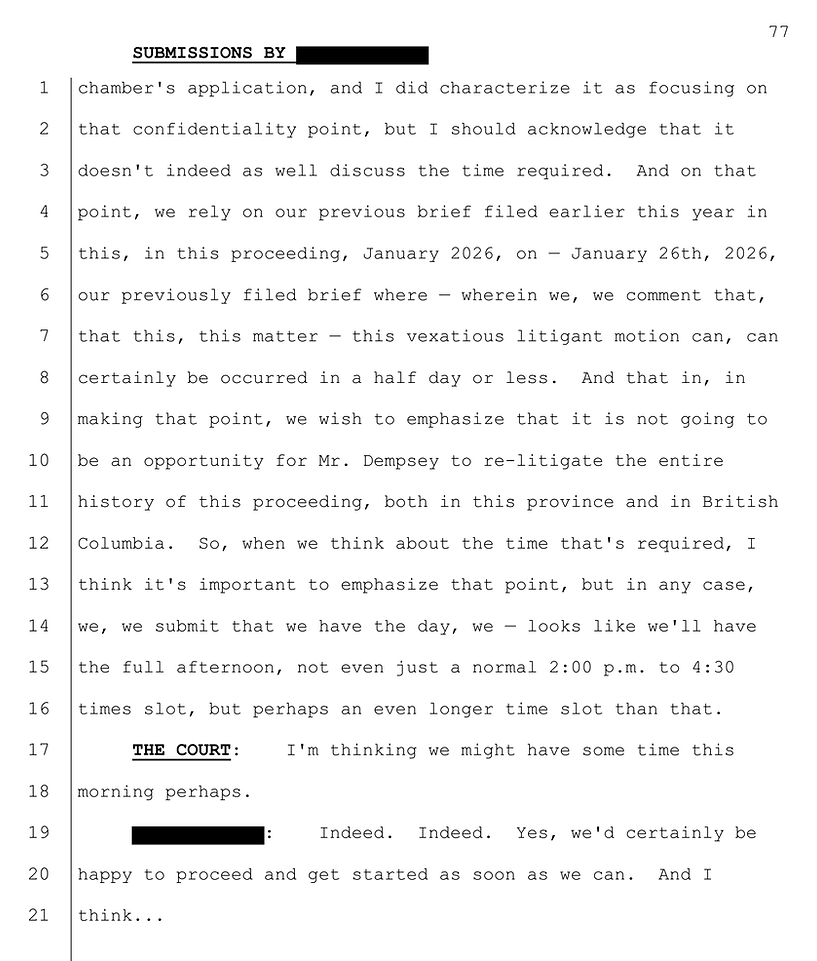
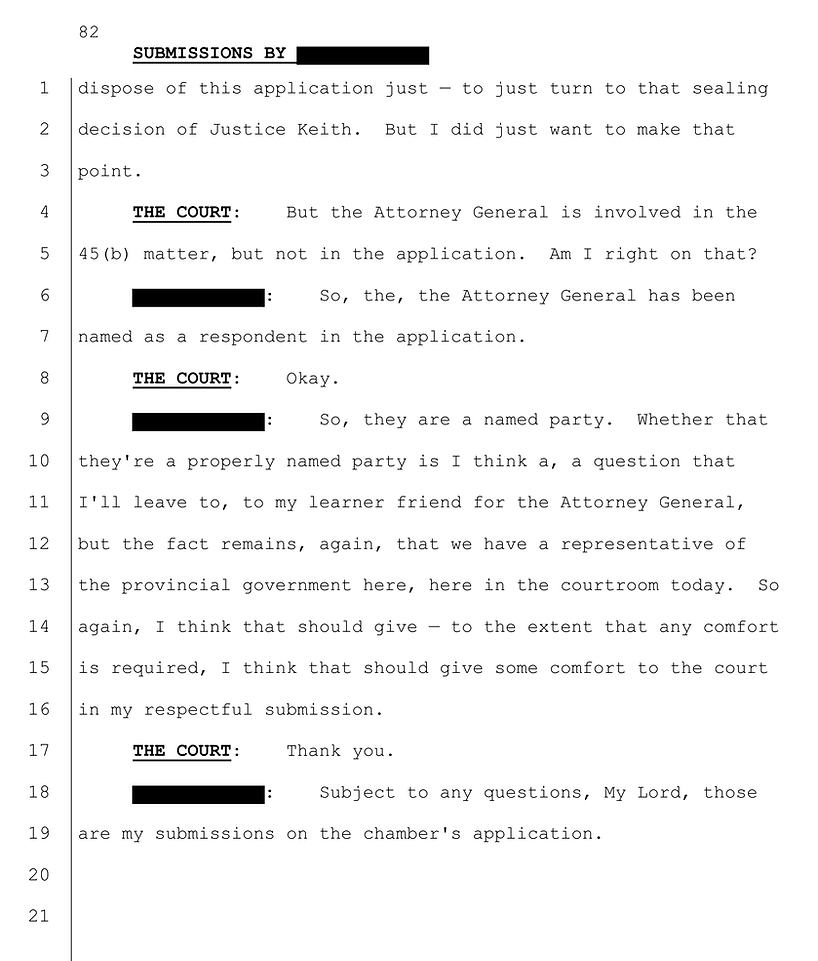
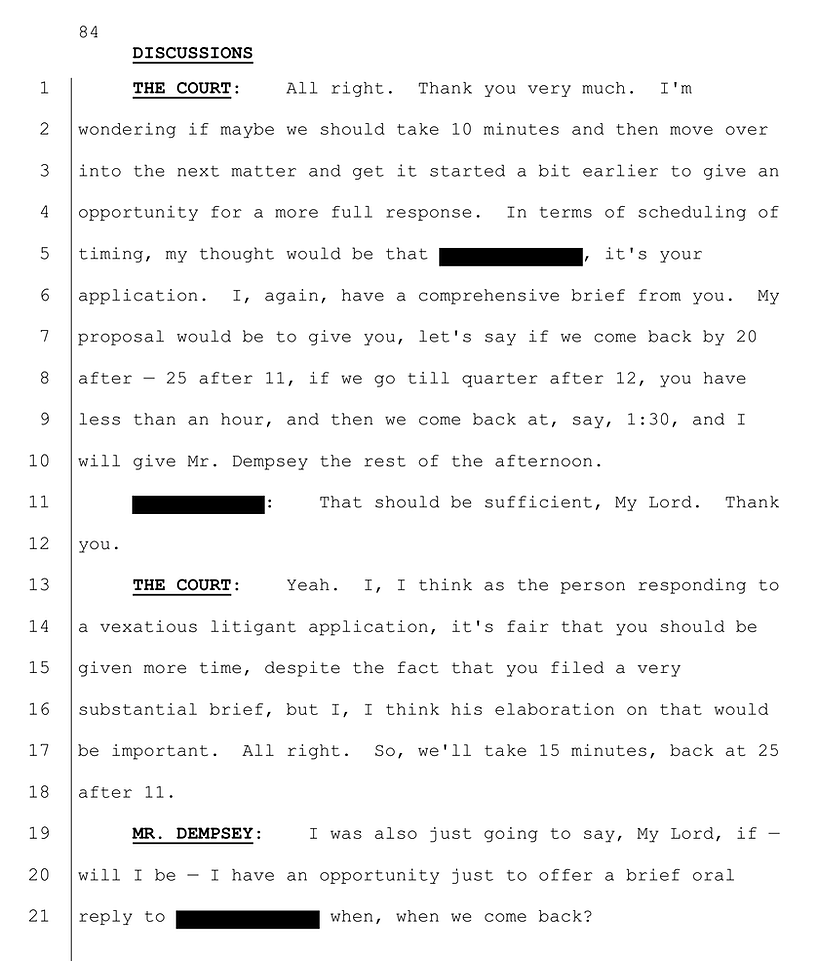
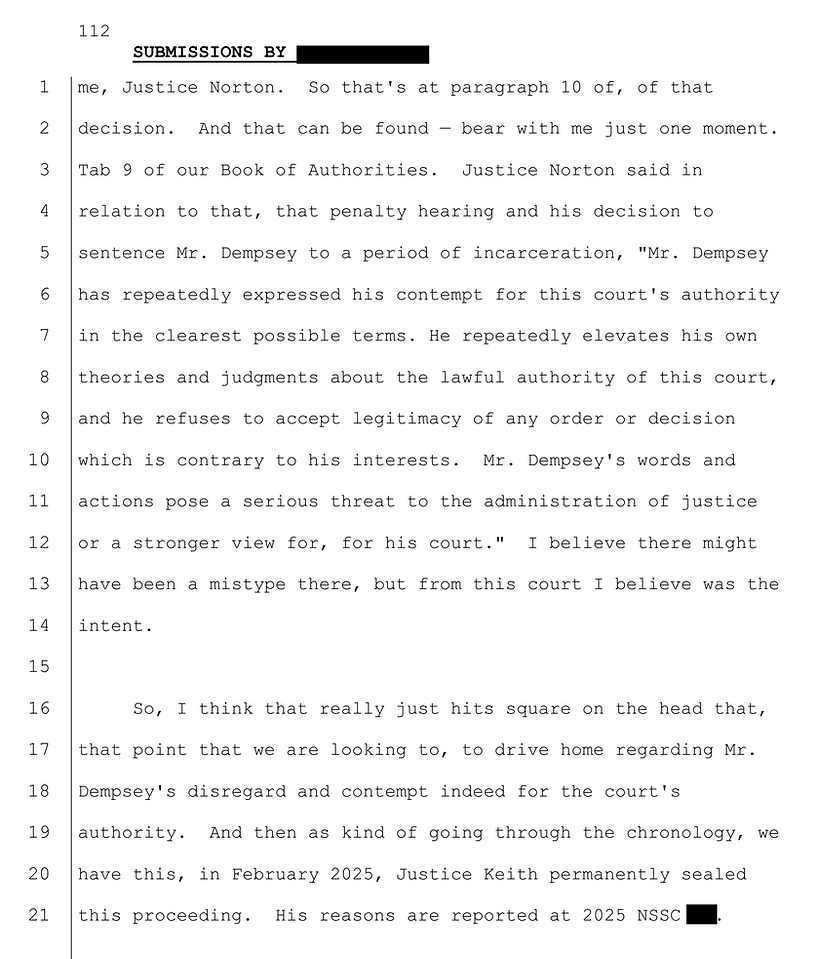
July 23, 2026 Transcript [Court Access]
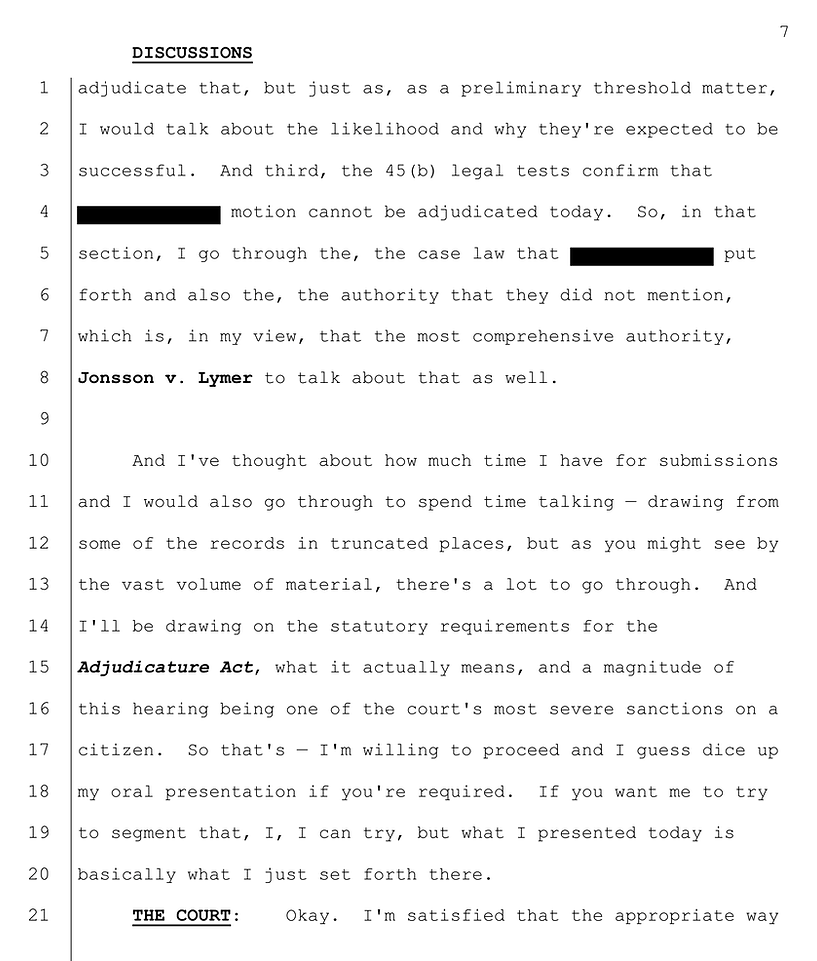
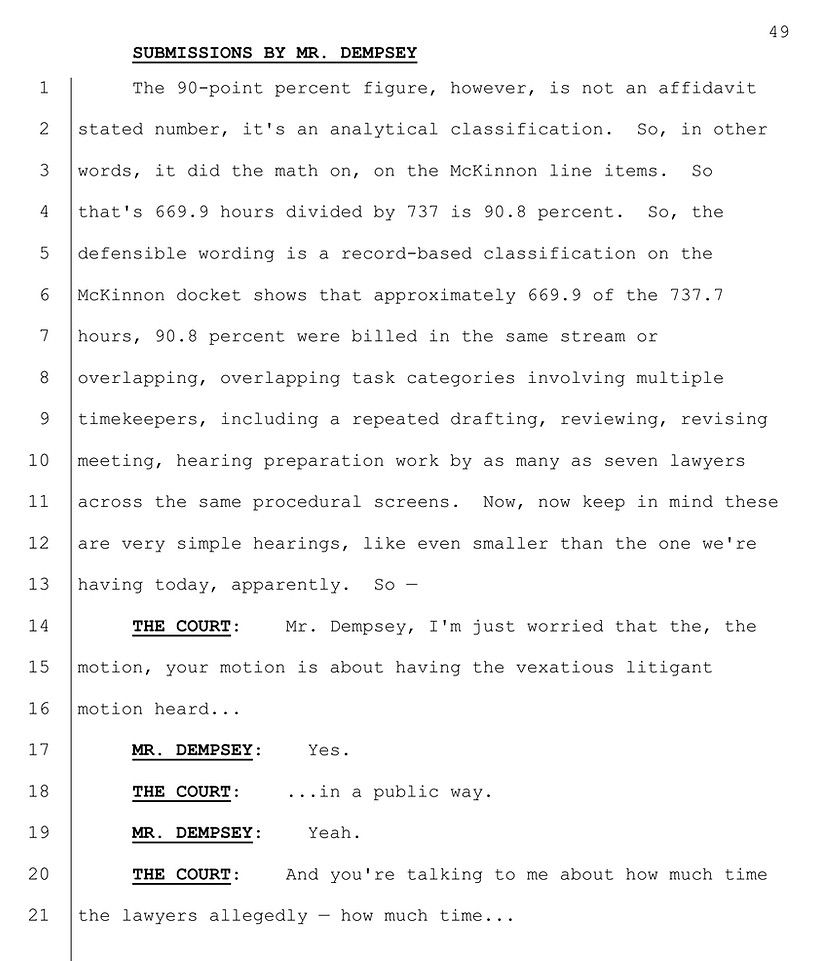
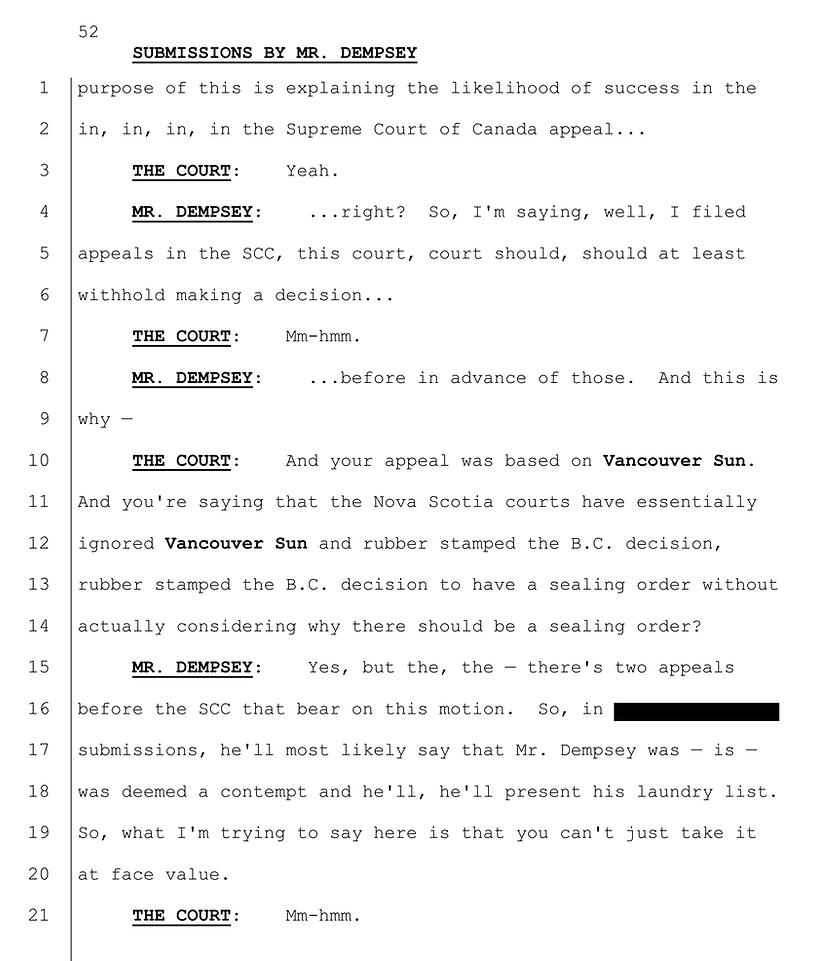
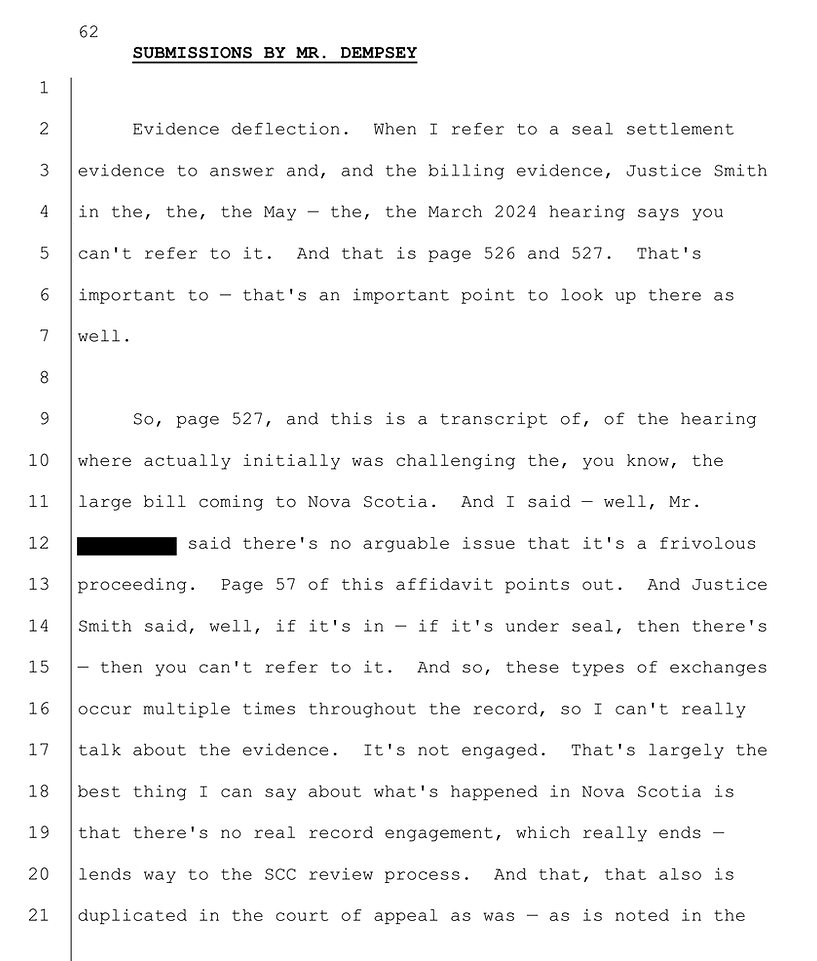
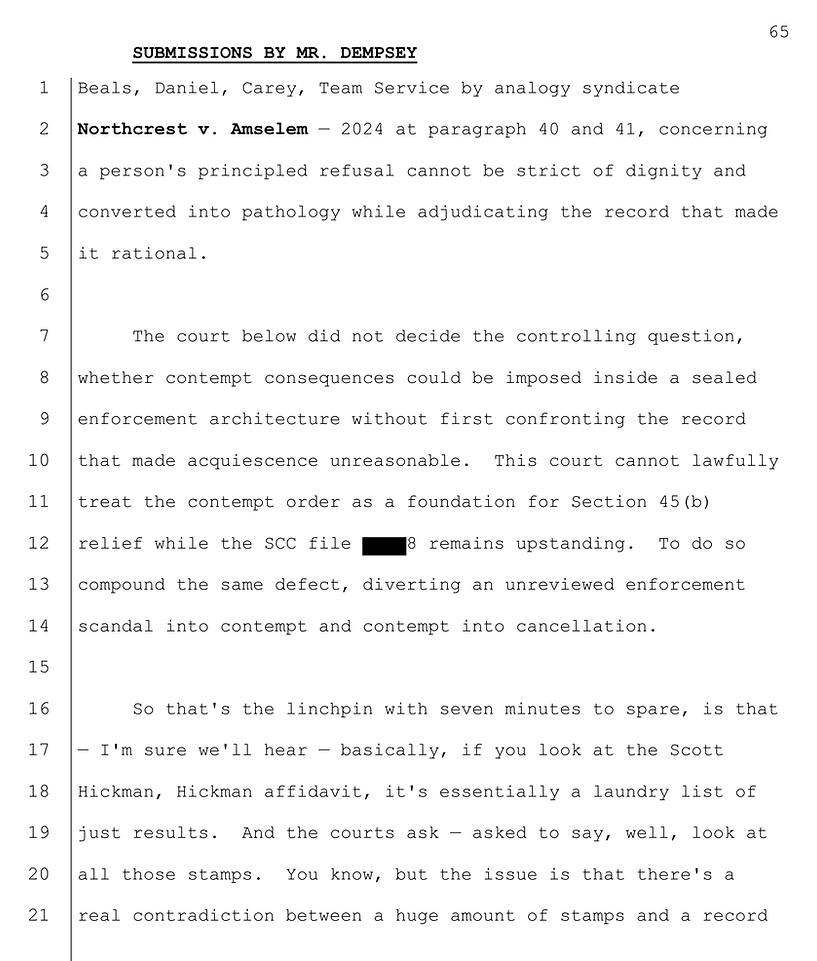
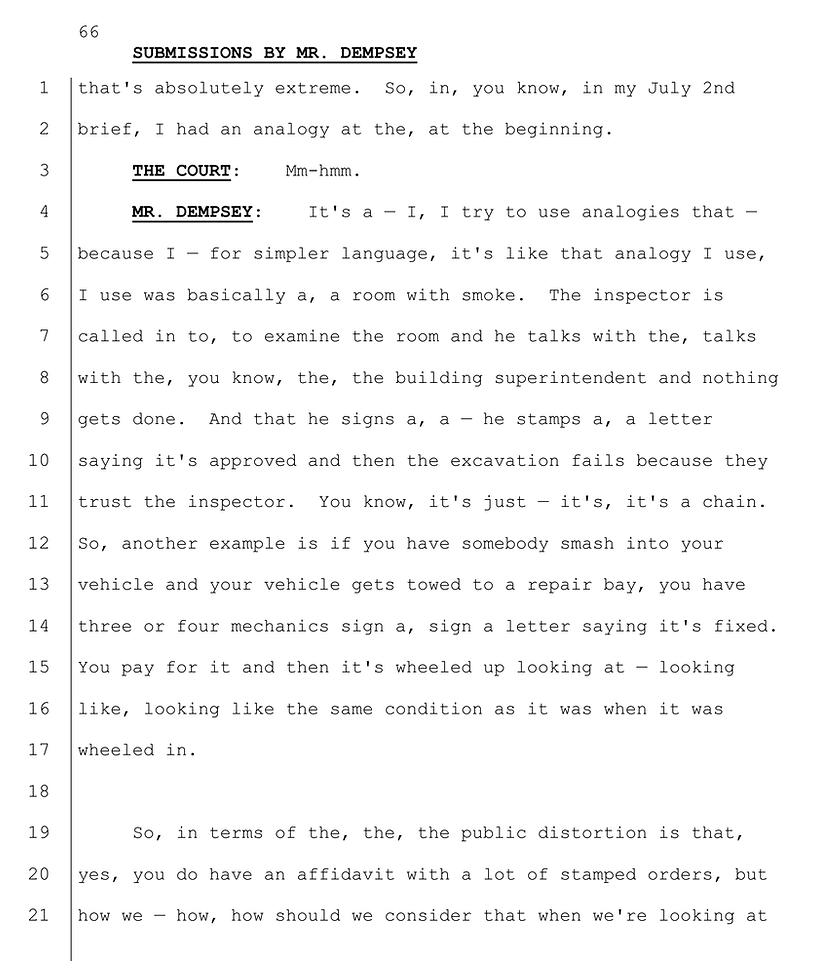
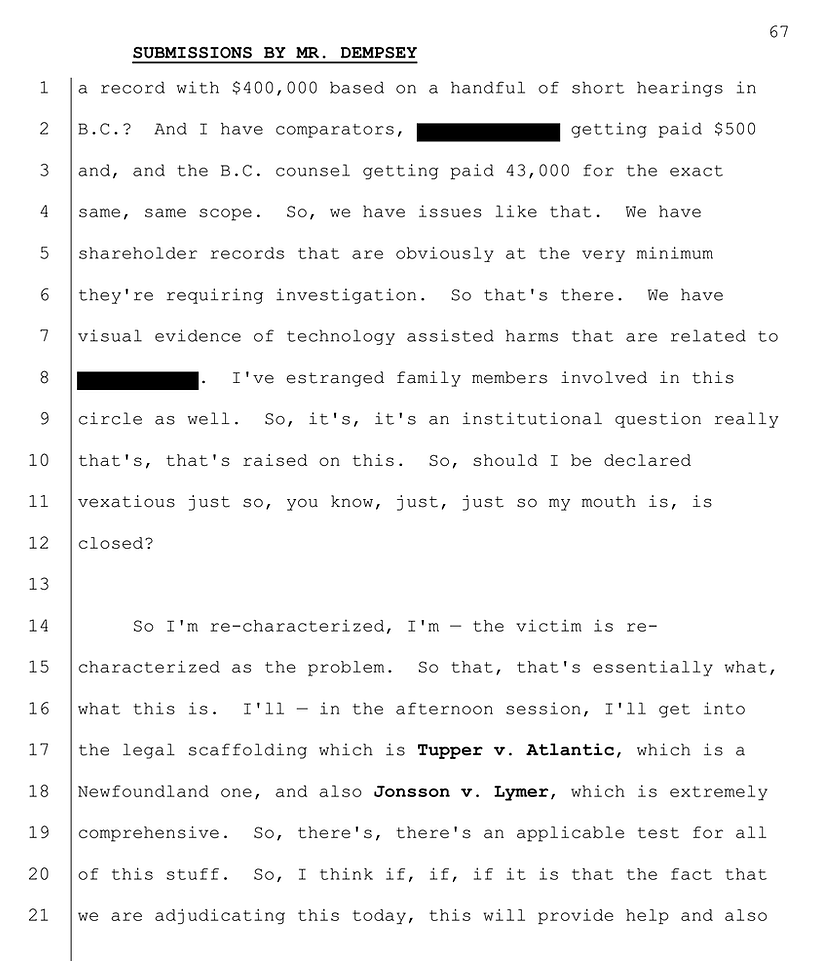
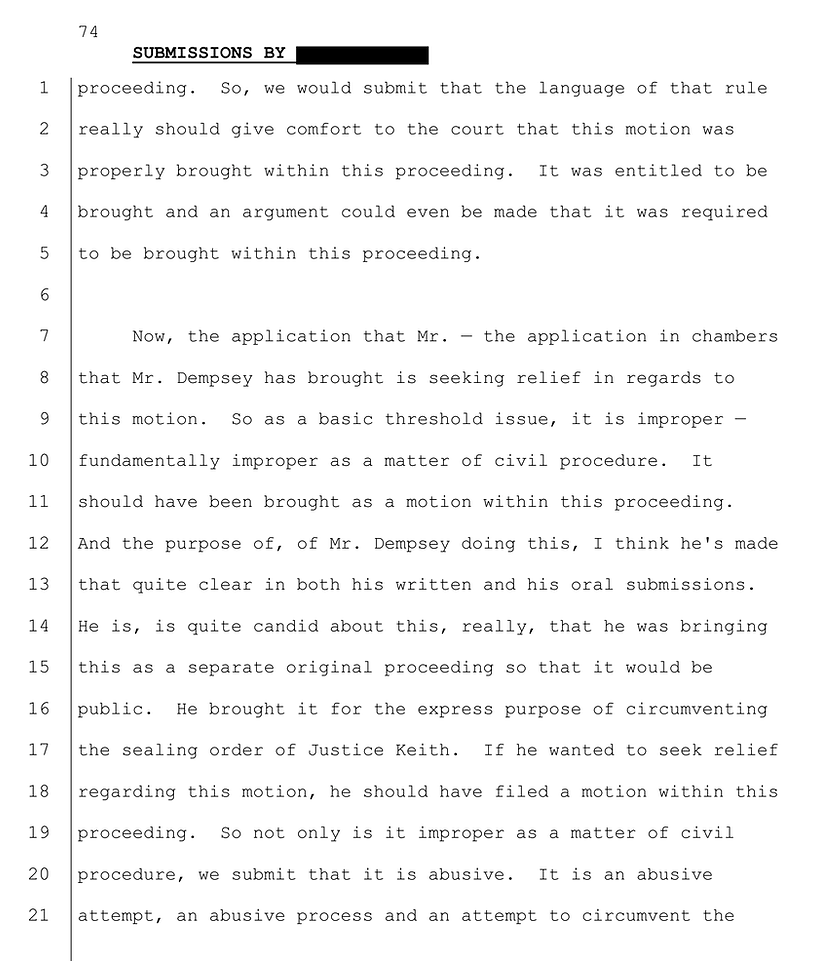
Below is the transcript of the hearing conducted on July 23, 2026, which was sealed in violation of constitutional protections. The subject's constitutional right to participate in Nova Scotia Supreme Court hearings was quietly sanctioned in a sealed motion on the same day; a motion that under s. 45B of the Judicature Act, would normally require several days and a public venue. No s. 45B analysis was performed. As outlined on the Crown page [Link], court access and relevant probative record materials were restricted ex parte, culminating in a public decision predicated on a false narrative. A comprehensive legal analysis of the antecedent proceedings is set forth here [Link]. The computer-assisted record audits published on this domain are generated directly from the sealed records.

OpenAI's Reasoning Model Analysis Against the Record.


Anthropic's Decision Analysis Against the Record.




A public-ethics scandal or a public-health scandal are the two conclusions available on this record when it is measured against the governing legal tests. One hundred and twenty-one of those authorities are compiled [Here], and they were before the Court in a sealed record the public has never been permitted to inspect. As for the evidence, the shareholder, +9,000% billing, procedural, and visual evidence is plain to anyone. What the Court has consistently done is conceal the evidentiary path—and its application against those legal tests—behind unconstitutional sealing orders, while publicly recharacterizing that same path in terms that pathologize the subject. The public is shown the characterization, but denied the record required to determine whether that characterization is true. The premise appears to be that the public will defer to institutional authority because it cannot see the evidence for itself. Yet, if a 72-page brief the Court itself described as “extremely, extremely comprehensive” is later characterized as rife with “incomprehensible jargon,” what legal test justifies concealing it from the public eye? Courts adjudicate evidence; they do not adjudicate what the public is permitted to think about evidence it has been forbidden to see. If the record can withstand scrutiny, openness should vindicate the Court’s characterization. If it cannot, secrecy cannot substitute for scrutiny under law. Why, then, have courts broken the rules on secrecy? The 4IR page offers a reason.

The Transcript.